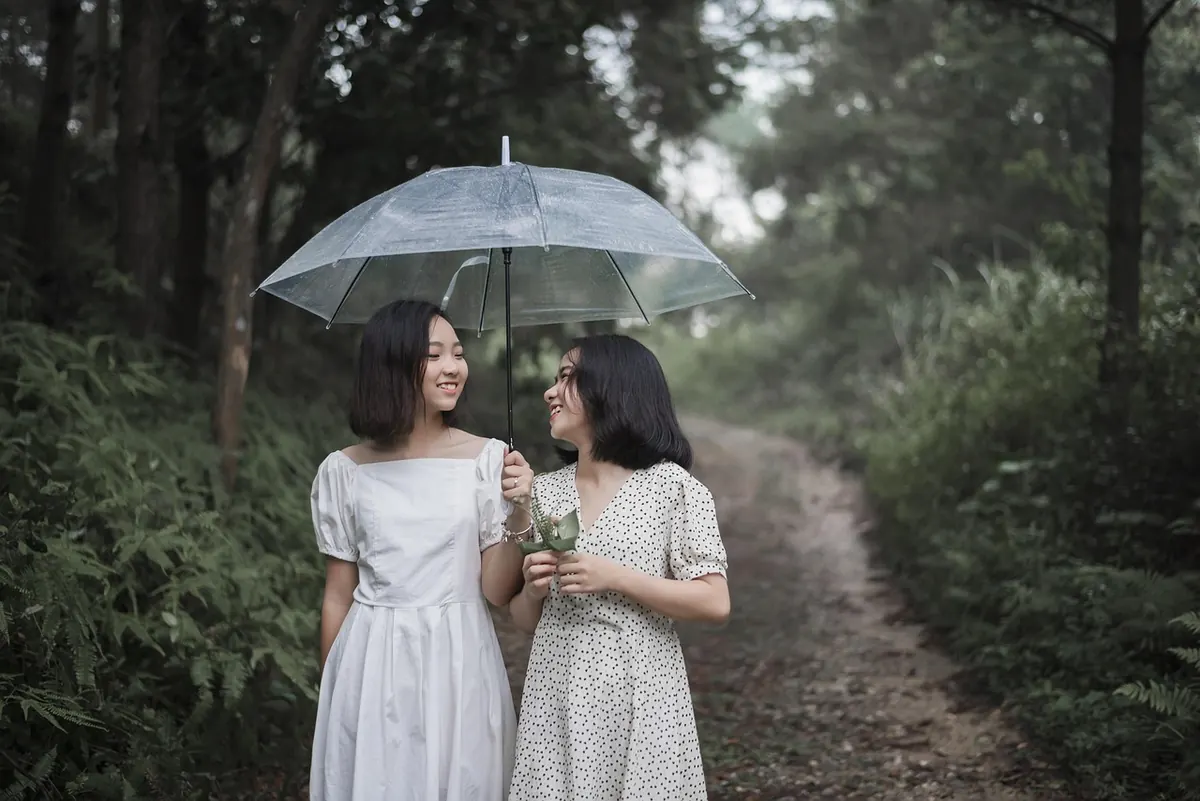
A first umbrella is a small piece of independence. Your child gets to hold their own weather, spin it on the walk to school, and feel like they are in charge of something. Then it jams, or the tip pokes a classmate in the eye line, or the whole thing weighs more than their backpack. The umbrella they beg for in the shop is rarely the one that survives a term.
What matters is simpler than the wall of cartoon-printed options suggests: a canopy that fits them, tips that cannot poke, a frame light enough to carry for twenty minutes, and an opener small hands can work without trapping a finger.
Size first: a canopy that covers without dragging
An umbrella that is too big is worse than one that is too small. Oversized canopies catch wind, tip backward, and bump along the pavement behind a small child. Undersized ones leave shoulders soaked.
As a rough guide, toddler and preschool umbrellas usually have canopies around 60–70 cm across, and early-primary sizes sit closer to 70–85 cm. Treat those numbers as a starting point, not a rule, because brands measure differently. The reliable test is the shoulder test: have your child hold the handle with their arm relaxed at their side while you hold the canopy open above them. The rim should reach past their shoulders and sit roughly at chest or shoulder height, not down at their knees.
Handle length matters as much as canopy width. A handle that is too long forces a small hand to grip near the top, which is exactly where the slider travels. Look for a short shaft with a thick, grippy handle — foam or rubberised plastic is better than smooth metal or varnish. A crook handle is fine and easy to hang on a coat peg, but check it does not swivel loosely in the hand.
Match the umbrella to how they will carry it
If the umbrella lives in a backpack, closed length matters more than open width: something in the 55–65 cm range usually slides into a school bag without sticking out. If it will be carried in hand the whole way, a slightly longer shaft is easier to hold steady in wind.
Safety checks that take a minute
Most umbrella injuries to children are small, avoidable ones: a scratched cheek from an exposed rib end, a pinched finger in a closing frame, a bumped head from opening it indoors. A few features remove most of that risk.
Rounded tips on every rib
Press the tip of each rib end with your thumb. It should be a soft plastic or rubber ball, not a bare metal point. Count them — on a standard eight-rib canopy there should be eight. Also check the top of the umbrella, the little spike where the canopy gathers, and make sure it is capped or recessed rather than a sharp metal ferrule.
A pinch-free opener
The pinch point on any umbrella is the collar that slides up and down the shaft, and the joints where ribs fold. Covered joints, plastic guards, and a smooth-running collar cut down on trapped fingers. On folding models, watch the gap between the collapsed sections when it shuts — a frame that snaps shut hard can catch skin.
Visibility, inside and out
- Bright colour or reflective piping so drivers and cyclists see them on grey mornings.
- A canopy that does not sit so low that your child walks blind. Teach them to hold it high enough to see the pavement ahead.
- Light-coloured lining if you want to spot them in a crowded school gate.
- No long, dangling wrist straps that can catch on a bus door or a bike handlebar.
One general safety note: an umbrella is not shelter in a thunderstorm. If there is lightning nearby, get indoors rather than holding up a metal-shafted canopy.
Easy-open options: what small hands can actually work
Auto-open umbrellas are usually the friendlier choice for children around five and up, because a single thumb press does the work and there is no wrestling with a stiff collar. Test the button in the shop with one finger — if you need your whole hand, it will be too firm for a five-year-old. Auto-open springs also release quickly, so teach your child to point the canopy down and away from faces before pressing.
Auto-close models are convenient for adults but can snap the shaft down fast. For a first umbrella, a simple manual close with a gentle, well-lubricated collar is often safer, especially if you plan to do the closing for the first few months. Many families start with a parent-opened umbrella at three or four, then hand over the button around five or six, once the child can hold it steady.
Weight and frame: light enough to carry, sturdy enough to survive
Hold the umbrella yourself and imagine carrying it at arm's length for the walk home. Under roughly 300 grams is comfortable for most primary-age children; anything much heavier will be dragged, dropped, or handed to you within a block. Fibreglass ribs flex in gusts instead of bending permanently, and an aluminium shaft keeps weight down. Very cheap steel frames rust at the joints and stiffen within a season.
Wind is the real test. Any single-canopy umbrella will flip inside out in a strong gust, so teach your child the trick early: let it flip, turn the rim into the wind, and push it back. A ventilated double canopy lets air through and inverts less often, which makes it worth the extra few grams if your route is exposed. Avoid buying an umbrella so flimsy that it folds in a light breeze — the frustration usually ends with it left at school.
Teaching the open-and-close routine
Give your child a repeatable sequence and practise it twice at home before the first rainy morning.
- Stand clear of people, doorways and faces. Point the closed umbrella down and away.
- Hold the handle firmly with one hand and press the button or push the collar up with the other.
- Once it is open, hold it above head height and check they can still see the ground ahead.
- To close, press the button or pull the collar down while keeping fingers flat and away from the folding ribs.
- Shake off the water outside, then leave it open to dry at home before wrapping the strap. Storing it wet is how canopies get musty and frames rust.
Two house rules help: no umbrella sword fights, and no opening it indoors. Both cover most of the accidents a first umbrella causes.
The two-minute check before you pay
In the shop, run these checks quickly. Press every rib tip with your thumb. Slide the collar up and down once and feel for catching. Weigh it in one hand. Open and close it twice. Check for a name tag inside the canopy or add one yourself — a surprising number of umbrellas go missing in the first month of school.
Then buy the one with the shark print if it passes. A first umbrella should feel like theirs, not like safety equipment. Get the size right, insist on rounded tips and a smooth opener, keep the weight down, and the umbrella that survives the term is the one your child will actually want to carry.
Photo: sasint / Pixabay